If you’re like me and follow a traditional American school schedule and take the summer off of homeschooling, you’re likely facing an empty calendar right about now. Work hard, play hard, right? Absolutely, however… if you want to avoid having to relearn a lot of material when school starts back up in September – the dreaded “summer slide” – then I highly recommend keeping your elementary student engaged with some fun homeschool summer learning activities.
What are homeschool summer learning activities?
Homeschool summer learning activities are not summer school. Instead, I intentionally choose to continue only those subjects that (1) are critical to practice on a near daily basis to avoid back-tracking and (2) those that my child specifically needs extra practice with. I also make sure to keep this practice at a minimum. I’ve talked about this a lot on my blog already, but I’m a firm believer in small, consistent daily habits and that extends to school. It’s better to work on a subject for a short time consistently every day than to do marathon study sessions once a week. Or worse, randomly.
Keep it Short and Sweet
When it comes to these homeschool learning activities, short and sweet is the key. This isn’t summer school, so don’t let academics take over your day. In order to do this, I use timers for those few subjects I’ve chosen to focus on during the summer. That way, both my daughter and I know how long study time will take and we can plan around it. Remember, unlike the school year, projects don’t need to get done by a certain week or have a strict deadline that will throw off your school calendar if you miss it. You have all summer to get these done, so just slowly chip away at them every day and see how much your student can accomplish before September.
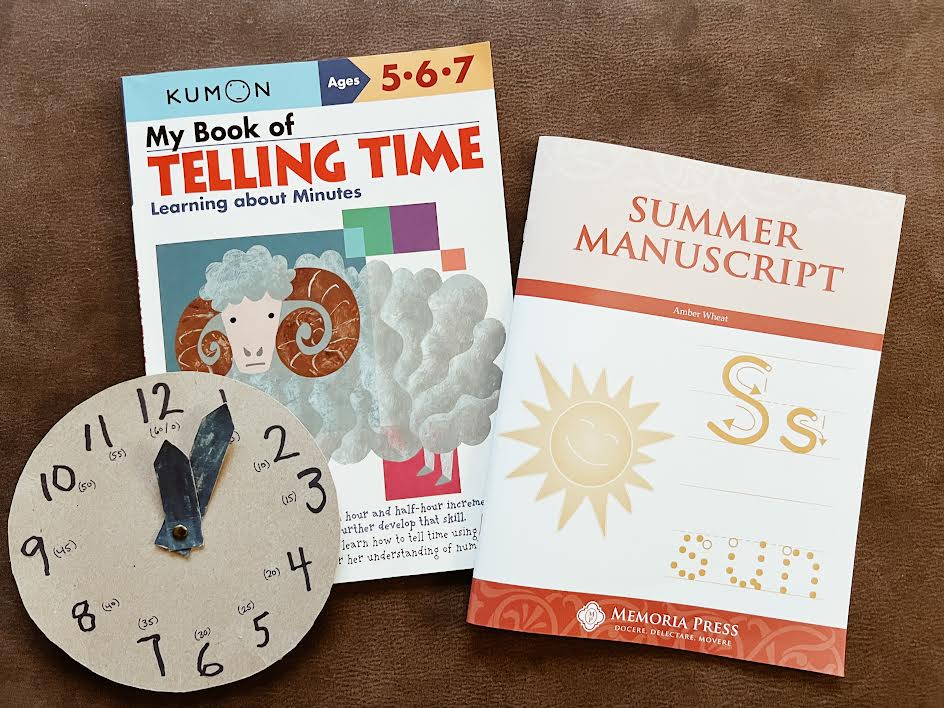
Those Critical Subjects: Reading & Arithmetic
So what are those critical subjects that slide the most if you were to take an entire summer off? For elementary students, reading and arithmetic are the two most important subjects to continue during the summer. In fact, I believe reading is so crucial to academic success that I wrote an entire blog post just about how to keep your elementary student reading all summer. Both reading and arithmetic require consistent daily or near daily practice to maintain those necessary skills. And both of those skills are foundational for core elementary school subjects. So set your child up for success by not letting him or her lose those skills over the summer break.
Arithmetic
There are so many different ways to approach math study over the summer. If you’re like us and use multiple math curricula during the school year, you can simply continue to alternate these textbooks over the summer and you won’t have to worry about getting a semester ahead every summer. And that’s what I’m doing this summer with my daughter who just finished second grade. We are continuing to work through her textbooks that we alternate (Abeka and Singapore). Similar to the school year, I set a timer for our math block. However, during the summer, I’m keeping that time much shorter. For us, this is still taking some tweaking, but we started with 30 minutes for math. When the timer goes off, she finishes the page she’s on and we put it away.
Some days, my daughter doesn’t feel like working in her textbook and so we do something else for that 30 minutes. Here are some other great ideas for using your summer math block:
Flashcards
Not for your entire math block maybe, but turn flashcards for math facts into a fun challenge. For example, how many can you get through in 100 seconds? Try this every day for a week and see if she can keep improving her personal best. I’ve also had students in the past make their own flashcards for math facts. They can make them colourful and pretty and the process of making the flashcards themselves – writing down the facts – helps solidify them. They also enjoy using flashcards that they’ve decorated themselves.
Speed Drills
These are so easy to find online and they may even come with your curriculum. (Abeka has speed drills in their quiz and test booklet.) Speed drills are like flashcards, but they are great for mixing up the material – writing out the time on the clock, unit conversions or even just an assortment of skills like these. So, similar to flashcards but a different format to mix it up.
Skill-Focused Workbooks
If you’re not using your main math curriculum over the summer and you know your student has a weak area (e.g. telling time) that needs some attention, find a workbook that focuses on that particular skill. There are so many great workbooks out there, like Kumon, that are fun for elementary students.
Grade-Focused Workbooks
Maybe there isn’t one particular skill that needs work. There are actually workbooks that cover entire grade levels. You can get the grade level your child just finished in order to keep it easy and just review all summer. Or if your child likes to be challenged, get the next grade’s workbook and just slowly go through it together. Come September, math will feel easy and who doesn’t like that feeling?
However you decide to keep your child on track, I highly recommend setting a timer and not going past it. The point is not to get the workbook or the flashcards done. It’s to exercise that part of your kid’s brain consistently. Don’t let summer “school” take over your morning!
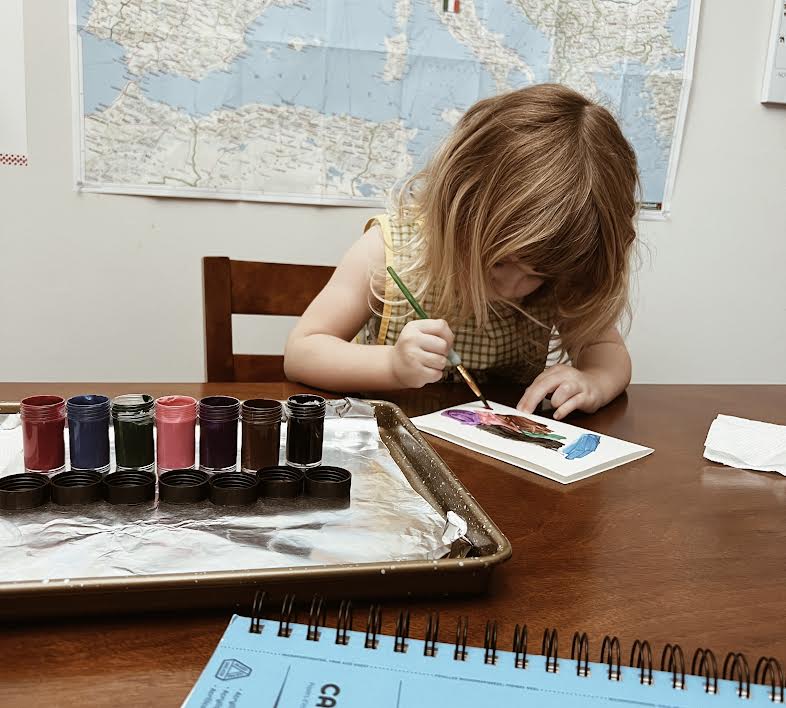
Other Subjects / Projects
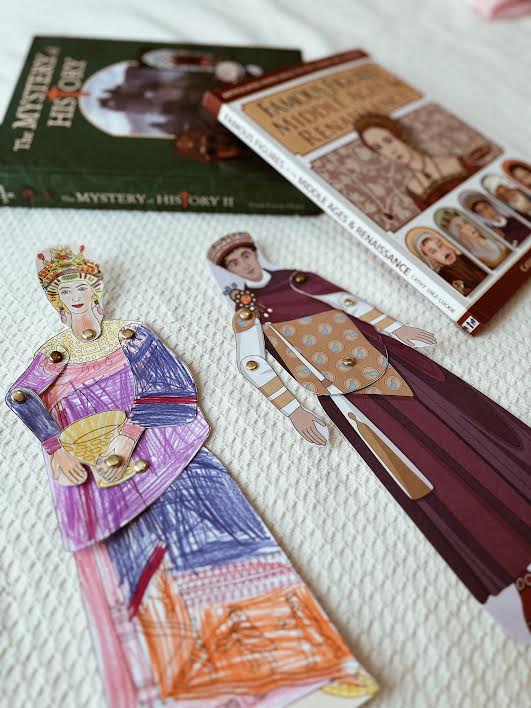
Is there a specific subject that needs extra attention? Were there fun projects that you just didn’t get to during the school year because you were short on time? Well, now is the time. Here are some things that are academic in nature but if you present them the right way, they can be seen as fun summer activities. It’s all in the marketing. For example, penmanship practice can simply be writing to a pen-pal all summer.
- penmanship practice
- history timeline
- science experiments
- art projects
- geography challenge
Musical Instrument Practice
And lastly, if your student is taking music lessons, don’t neglect music practice. Summer is a great time to give more dedicated focus to practicing a musical instrument. If your child is planning on auditioning for orchestra or band at the end of summer, this can really help keep up motivation. Another way to mix up the summer practice routine is to introduce some more fun pieces, like movie scores or favourite Disney songs. Even if it’s really easy and below your child’s level, it’s great sight-reading practice. Use the extra time in summer to go above and beyond. It’ll make things that much easier when school is back in session and the schedule is busy again.
What are your summer learning subjects this year? Do you get any fun projects done over the summer?
Keep Reading About…
Tips for keeping your kids reading this summer: Have a Literary Summer
Keeping music practice fun: Effective Music Practice


Leave a Reply