Despite very different personalities and learning styles, I taught both of my oldest children to read at the age of 3. If you’re interested in teaching your preschool child to read, whether he’s 3 or a bit older, here is an approach that has worked well for my kids. It doesn’t require expensive materials or a fancy method – though I do rely heavily on simple Montessori principles in the very early days. It’s just a simple system that works if you are consistent.
1. Skip the ABC Song
One of the things I appreciate most about the Montessori approach to teaching the alphabet is its focus on the sounds the letters make as opposed to their names. My kids have never been taught the ABC song (though they can sing along with it now). Instead, they were taught from day one to associate a letter with the sound it makes. I honestly believe that this decision accelerated both kids’ reading progress tremendously. We didn’t waste time learning that “B” is called “bee” and then started learning the sound it made. Rather, we started right away with the fact that it says the “buh” sound.
And the truth is, my kids know the names of the letters. Though I never had to teach them. They picked them up organically from everyday context and from read-alouds like Dr Seuss’s ABC. For books like that, I would say both the name of the letter and the sound the letter makes, so the kids would understand they went together. And again for music, we used the names of the notes: A, B, C, D, E, F, and G. Kids will naturally pick up on these things. The letter B has a sound, but we can also call it “B”.
2. The Non-alphabetical Alphabet
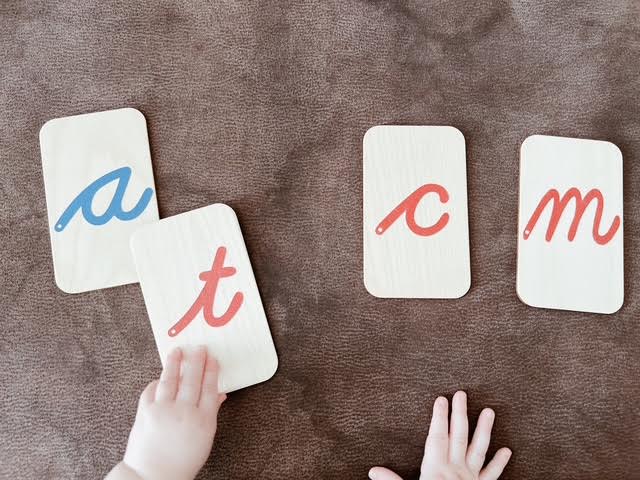
Don’t learn the alphabet in order; be more strategic. The Montessori Method groups letters in such a way that kids can start phonics pratically immediately. If you look at the list below, you’ll notice that 5 of the 6 sets have 1 vowel and 3 consonants that make easy-to-read words in English, either within the group or with letters in previously-learned groups. I have followed the Montessori letter grouping for both of my readers and believe it’s quite a natural progression to learn the alphabet.
And a true Montessori deck of cards, whether you order a fancy wooden set off Etsy or make your own with index cards (I’ve done both!), differentiates between consonants and vowels with red and blue, respectively. Even though you aren’t teaching the concept of consonants and vowels yet, per se, the student is getting the subconscious message that they are indeed different.
I wrote a longer post about the Montessori approach to phonics with more details about how we actually introduce the letters and study them. But below is the list of letter groupings for your reference:
group 1: c, m, a, t
group 2: i, r, s, p
group 3: b, f, g, o
group 4: h, j, l, u
group 5: e, d, n, w
group 6: k, q, v, x, y, z
3. Start the Handbook for Reading
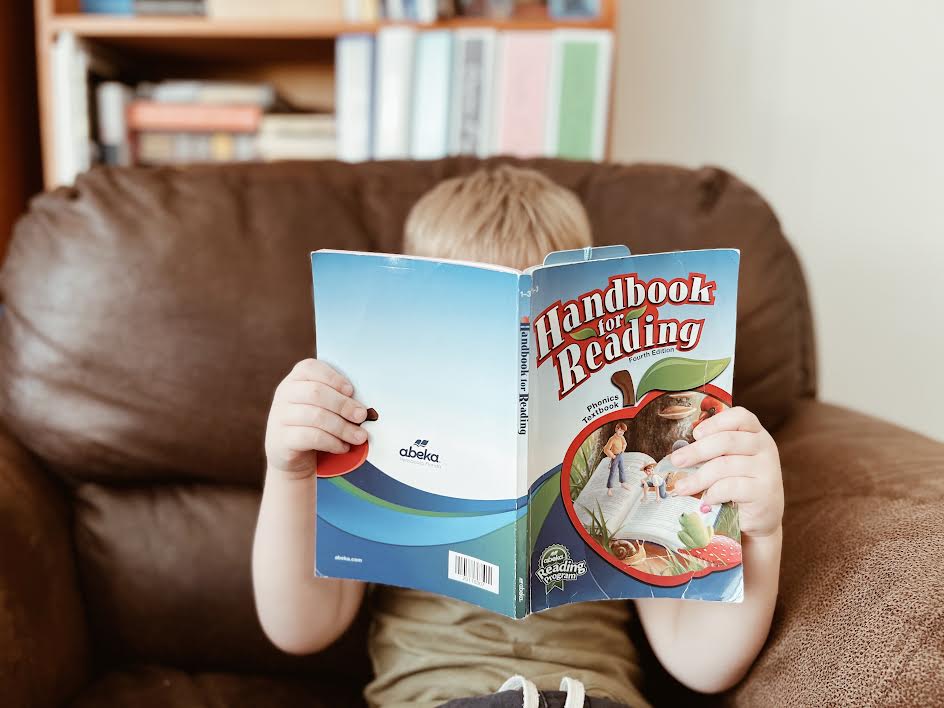
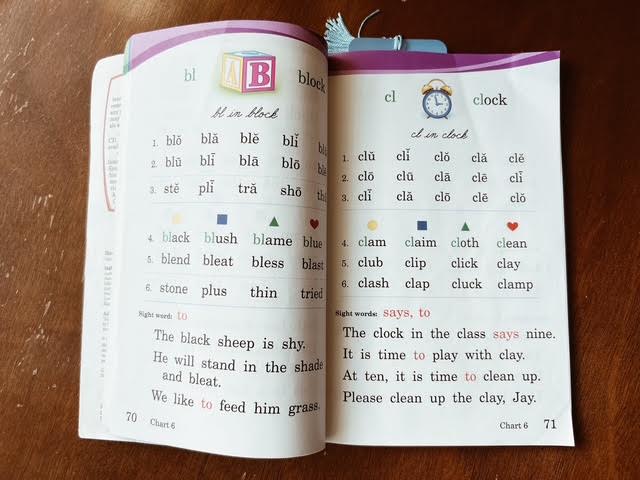
I don’t get a commission from Abeka, I just know it works. It’s what my mother used to teach me and my brother to read and it’s what I’ve used with both of my readers. I’m sure there are other books that work well, but why mess with success when you know you’ve got a good thing? Abeka’s Handbook for Reading starts easily enough. I’ve found that as soon as my students know the entire alphabet, we can start taking the Handbook for Reading one page at a time now. And that’s it. We just read one page per day.
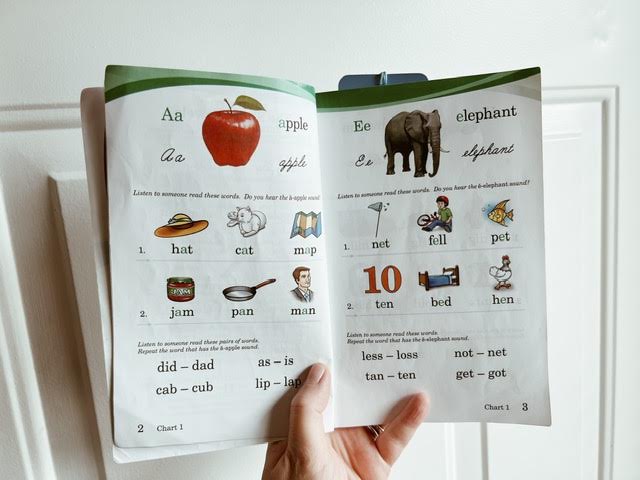
The beginning of the Handbook is quite simple. So once I know my student can sound out the alphabet from this book (different fonts, possibly first time seeing print instead of cursive), then, depending on how well my budding reader is doing, I will start the Bob Books.
4. Add on Level-Appropriate Readers
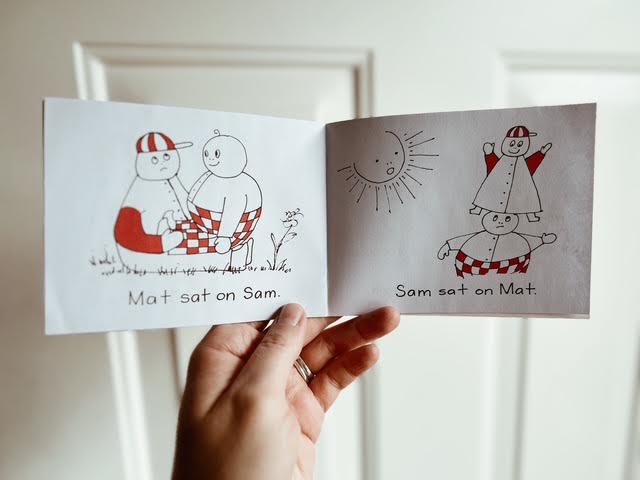
The Bob Books are incredibly simple, but are a great motivation boost for a kid who is just learning to sound out words. They take those few simple CVC words (consonant-vowel-consonant) and make a short “story” with them. These are literally the first books my kids ever read. And that can happen right after the alphabet is mastered.
5. Solidify Your Daily Routine
And this is the routine from here on out for the rest of preschool (and a bit into the kindergarten year, depending on how fast your student goes). We read one page in the Handbook for Reading, which is now adding more and more complex blends, as well as common sight words.
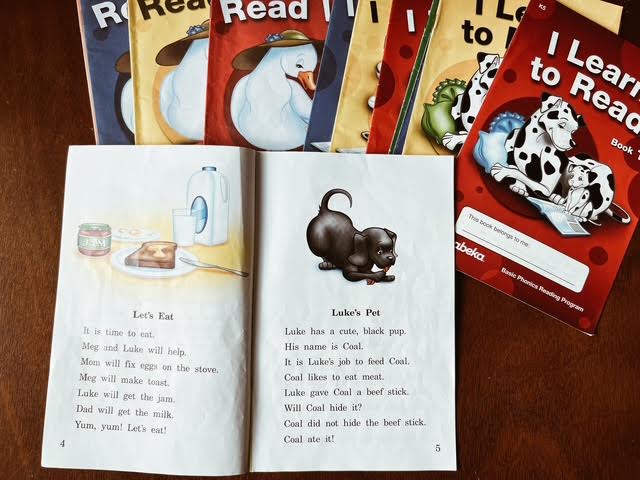
We continue reading “books” every day. After this first set of Bob Books, I switch to Abeka’s K5 readers series because they pair so well with the Handbook for Reading. We read about a page or two in one of these books each day. They progressively get more difficult and mirror the order of blends and sight words found in the Handbook.
Final Tips
Consistency over Quantity
Consistency really is the magic ingredient here. It’s better to skimp on how much time your student is spending reading to you, than missing a day. It’s better to spend 5 mins on the Handbook or re-read an easy Bob Book than skip an entire day. Especially if your student does not take to reading very well. Do not assume the weekend is off-limits. If you have a struggling reader, do NOT skip 2 days every week of him reading to you. (And obviously, summer does NOT mean a break from reading.) You can encourage consistency with a simple sticker chart. Kids love a sticker chart and mom likes seeing visual progress.
Patience & Encouragement
Reading is hard. Period. And sometimes, when we’re excited for our kid to learn something that is so easy for us, we get impatient. We take for granted the mental effort that is our brain interpreting symbols into words and thoughts, let alone reproducing all of those sounds. If you want your child to enjoy reading, it starts now. Cuddle while he reads to you. Be in the moment and try not to be impatient and jump to correct too soon. My son is still at the stage where he will start to sound out a two-vowel word like “stage” as “stag” and then I see him notice the silent e at the end and correct himself to a long a sound. I can see the wheels turning and it seems incredibly slow to me. But I bite my tongue to keep from correcting immediately because I know he usually fixes it without any help from me.
Bonus Tip: Don’t Stop Read-Alouds!
Lest you be tempted to stop, or cut back on read-alouds with your budding reader, think again. Reading aloud to your new reader is incredibly important for their learning. Especially if they are looking over your should and are seeing the words as you read them aloud. Think, proper pronunciation, intonation, punctuation, etc.
And that’s it. Both my kids – very different personalities and learning styles – were reading before age 4. My eldest has Einstein Syndrome, which presented its own set of challenges (think memorising too much…), but I swear by these steps and wish you luck on your own quest to teach your child to read.
What curriculum or series of readers did you use to teach reading? Any additional tips to share?
Keep Reading About…
All the subjects we covered in my son’s First Semester of Preschool


Leave a Reply