It’s summer and even though the school year is over and everyone is on break, you’re still you. And learning never truly takes a day off. At least, not if you’re in the pursuit of excellence. Letting your school-age kids veg in front of the television for nearly three months is not an option. Last year I shared a list of general homeschool summer learning activities that work for elementary students. This year I’m sharing exactly what I’m doing with my own rising kindergartener and fourth grader.
Back in spring, I had grand plans for the summer. But then the break actually came and my work schedule got busy. So I decided to keep the homeschool summer routine light and simple. We are focusing on the three most important subjects for my kids to keep up with over the break: reading, maths, and music. Those three core subjects happen every day before lunch no matter what. But on days when I have a little bit more time, we are enjoying doing US geography together. Our days also include some memory work, baking and cooking, and the kids learning some new chores.
The 3 Core Academic Subjects
1. Reading
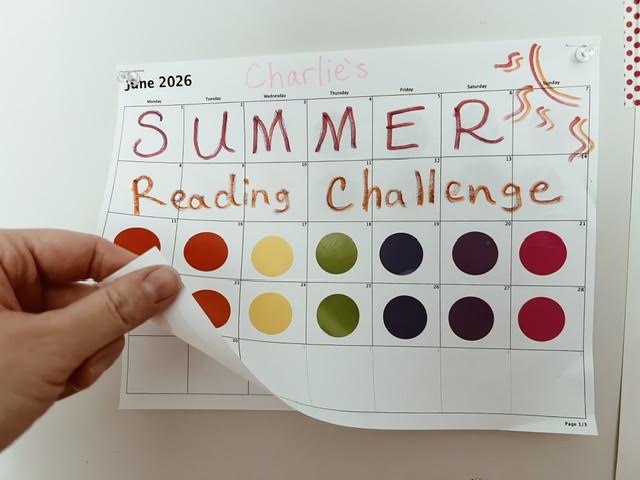
Last year I wrote about all the ways you can cram more reading time into your summer. And this year, we’re doing a few of those activities. For my rising fourth grader, I set a reading challenge for the summer. No number of books or pages. Instead, she has to read for at least half an hour every day, including weekends. I want quiet reading time to be a daily habit for her that is not associated with school. It’s just something fun that she does for herself.
As a 7-year-old, she has just started reading fun chapter books. This has been the summer of The Wild Robot trilogy, Charlie and the Chocolate Factory, Harry Potter, Nancy Drew, and Percy Jackson. I almost envy her this time of reading these novels for the first time. Being able to lock herself in her room and just read. Once we found the type of books and the authors she enjoyed, the rest was easy. Now she even gets up early to read.
The reward for completing the challenge of reading every day this summer will be a book store date with mum and stopping to get macarons. But at this point, putting a sticker on the sticker chart is just extra. She would read most days regardless of the chart.
In addition to her personal reading time, most days I read aloud to the kids while they eat lunch. Both school-age kids loved D’Aulaire’s Book of Greek Myths so much that they wanted to hear D’Aulaires’ Book of Norse Myths. Some of the names are difficult to pronounce, but it’s silly and surprisingly (or not) similar to the Book of Greek Myths.
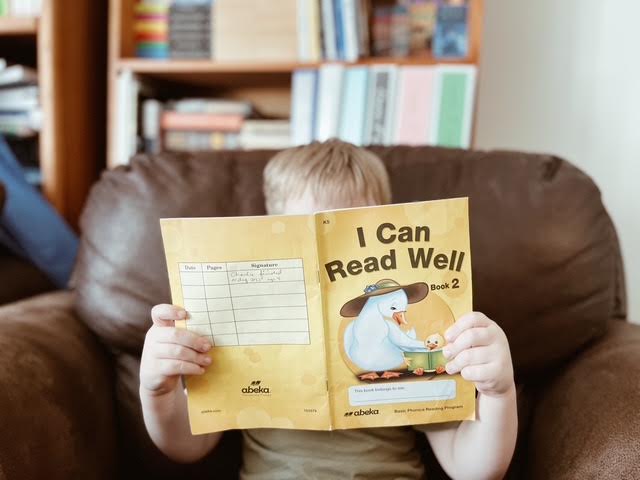
My just-turned-4-year-old learned to read this past semester, so taking a break from the books was not an option for him. He worked so hard and is doing so well that the idea of stopping and back sliding is unfathomable. In that sense, “preschool” never really ended for him. We continue to read together every weekday and he consistently gets more and more fluent as a reader.
2. Mathematics
As I have confessed many times on this blog, I’m biased when it comes to mathematics education because I used to be a math teacher and tutor for several years. Forgetting math principles or math facts over the summer is not an option, so we spend a few minutes every weekday on math. This summer, my rising 4th grader is working on Saxon’s 5/4 textbook. The routine is a speed drill and half an hour working in the textbook. When the timer goes off, she finishes the problem she’s on and puts her book away. Some days she gets more problems done than others. If I catch her playing around while the timer is on, I might tack on another 5 minutes. But it’s such a short amount of time for math that she can generally stay focused and get about half a lesson done.
For my rising kindergartener, we are doing some activities in a Montessori guide I have and also starting Singapore’s Primary Mathematics 1A. He just started number bonds and is doing really well. I’m not trying to get him ahead in math this early, but he can do the work, so I’m not going to make him wait. This way, once we hit a tricky topic, we have all the time in the world to slow down and cover it thoroughly. So far, nothing tricky though. Singapore’s first grade texts are very easy to use with little kids.
Need extra math support? If you’re homeschooling this year and your child could benefit from one-on-one math instruction, I also offer personalized online tutoring for homeschool students. Whether your student needs to strengthen foundational skills or is ready to move ahead, I’d be happy to help. Learn more about my tutoring services here.
3. Music
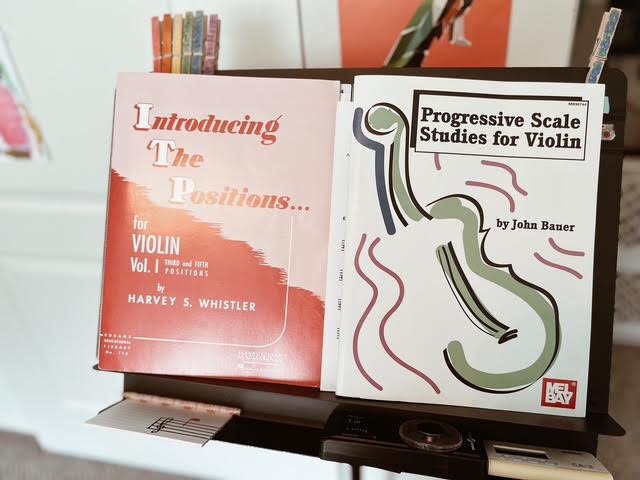
Both my school-age children have instruments to practice daily. My rising 4th grader has an orchestra audition in August to prepare for and a fiddling competition in October to prepare for. Having short-term goals, especially an August goal, is great for keeping young musicians motivated to practice over the summer. My rising kindergartener has not seen his teacher over the summer, unfortunately, so our goal has been to surprise her with how much progress he has made.
Because music practice is such a normal part of our day, both during the week and on the weekends, I don’t generally have to bribe the kids with set practice times. My son knows that cello practice only takes a few minutes and my daughter has enough fun practicing certain pieces that she can just get through her practice list without losing motivation.
Other Summer Work
US Geography
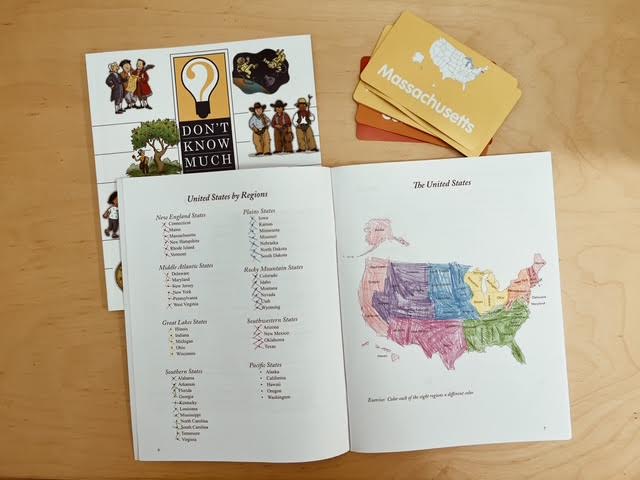
This subject doesn’t happen every day, but when we have some extra time together and I don’t have a work deadline to meet, the kids and I study US geography together. I had ordered US Geography from Memoria Press and my rising fourth grader is really enjoying working through the textbook. Anything with maps is an easy sell for her. But combine that with colouring pages and colourful flashcards to practice and she’s all over it. The Memoria Press kit also came with the book Don’t Know Much about the 50 States and my daughter has been interested enough to just pick it up and read it for fun.
Memory Work
This summer, I also wanted to help my kids memorise the prayers and creeds they hear every Sunday at mass. My daughter already knew some in English and Latin, but I really wanted to spend some time doubling down and making sure she knows them well. She has memorised a lot of Bible verses out of context, so I wanted her to start learning longer passages.
In Prima Latina (our 3rd grade Latin course from Memoria Press this past school year), my daughter learned the Pater Noster (Our Father), but she didn’t quite have it down well enough to recite fully. So her summer memory work has included reviewing that prayer as well as learning the Apostles’ Creed in English.
My rising kindergartener is old enough to learn how to make the sign of the cross and pray the Our Father in English. Both kids are memorising things so well that I just keep adding on as the summer goes. I don’t have any hard and fast goals – just that they continue to stretch themselves.
Cooking & Chores
Cooking is technically a chore, right? The kids, however, love to help in the kitchen – all 3 of them! And since summer is a slightly slower pace of life, I slow down and let them join me in the process. Yes, it makes everything take longer (and makes a larger mess), but it keeps them busy and adds to their practical life skills.
We also do the housework chores together. Both my 7-year-old and 4-year-old are able to help with many chores around the house now, from drying and putting away dishes to folding laundry. I’m intentionally using the summer time to help them up-skill their housework so they can help out more during the upcoming school year without taking too long or slowing me down.
Intentional Summer Routines
I have learned to chill out a bit when it comes to summer schedules for the kids. Yes, vegging out in front of the tv still happens (my husband introduced them to Star Wars this summer…), but as long as those three core academic subjects get done, I feel like the days are not being wasted. And when they’re tired of watching movies, building forts, and playing dress-up, they know they can find me and I can give them meaningful work to do. Everyone is happy. The summer is being enjoyed and I don’t have to worry about starting September with students who forgot half the previous school year.
What about you? Do you plan heavy for the summer break or just go with the flow?
Keep Reading About…
Make sure you are getting the most out of summer with my Ultimate Summer Checklist
Ideas for Getting Kids to Read More over the Summer
Summer Learning Activities for Elementary Students
Preparing to Get Back into the School Routine after Summer Break


Leave a Reply