If you’re reading this particular blog post, you either have a student who loves math or a talented student whom you think has the potential to get ahead. You want to help your child move to a higher level without destroying their childhood or locking them in a room with a textbook and a glass of water for ten hours. (I don’t know where these examples come from…)
I’ve taught high school math and tutored math and statistics for more than fifteen years, so I’ve worked with my fair share of students, from the naturally gifted to those who struggled just to keep up. A few weeks ago, I wrote about helping your homeschooler who is struggling in math. This week, I want to focus on those students who seem to excel at everything you give them.
You know your child has the potential to get several grade levels ahead. But how do you help them get there without the burnout?
Disclaimer: Talent vs Hard Work
I think it’s worth noting at the outset that being good at solving mathematical problems is a skill that can be taught and can be practiced. Yes, some people seem to have a gift or a natural talent for mathematics. But that doesn’t mean every person who has that talent will put in the work required to be great at mathematics. Talent alone accomplishes nothing.
“Hard work beats talent when talent doesn’t work hard.”
~ Basketball Coach Tim Notke
So whether you think your homeschooler has a natural aptitude for math and you want to give them a boost, or your child simply loves math and wants to keep learning past their current grade level, here are a few of my tips for helping your student get ahead.
Build a Strong Foundation
One of the reasons I love introducing my children to mathematics with the Montessori Method is because I believe it gives them such a solid foundation in understanding numbers and especially place value. I won’t go into detail here, but this Montessori guide for arithmetic is how I started my kids and I absolutely love it. Using beads to explain place value has made it so easy for my oldest to grasp the concept of borrowing and helped her add and subtract large numbers much more easily than the students I had when I was teaching professionally. I can tell the difference it makes.
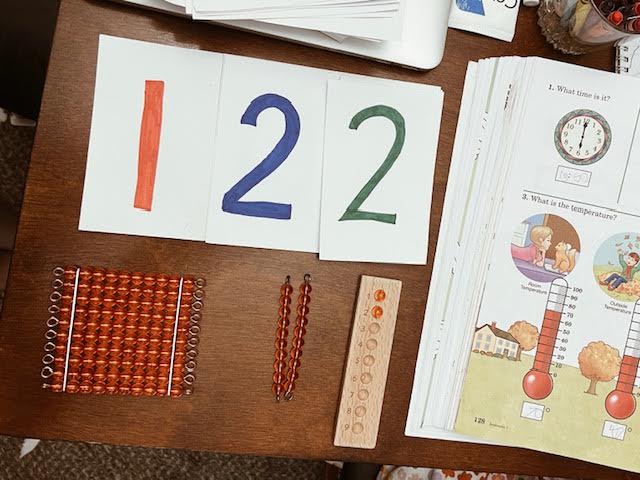
I also have chosen to prioritise math facts with my elementary level daughter and now her brother who is just learning his number bonds. The fact that 6 is made up of 2 and 4 is something a kindergartener should be able to see visually and interact with, yes. But after they understand that, these facts need to be memorised to the point that your student shouldn’t have to think about them. No calculation required. Certainly no counting on their fingers.
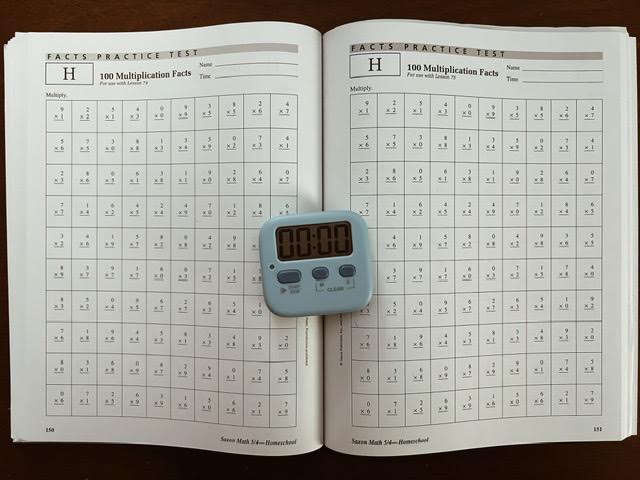
Even if you know your child can handle more than addition facts right now, you need to spend time on this. By all means go on with more advanced concepts. But continue to drill the math facts. In my daughter’s math block, I schedule time for flashcards and a speed drill daily. Then she does her book work. So we are constantly reviewing these foundational skills and increasing speed of recalling that information.
Schedule Math for Prime Time
Those morning hours of homeschooling, when the fog of sleep has completely lifted, but you’re not quite hungry for lunch yet – I like to call those hours Prime Time. It’s when a lot of students are focused, motivated, and can give their fullest attention to the subject at hand. This is when I schedule the most important subjects in my homeschool: music and math. I actually wrote an entire blog post about this last week – time blocking your homeschool schedule.
Even though I believe in shorter lessons and emphasise daily consistency, math (and music) get the bulk of those Prime Time morning hours. They are the priority. I have a math block for my 4th grader that is 1.5 hours. Now, keep in mind that she is 7. So you can understand that some of that time is inevitably spent getting a drink of water, using the bathroom for the third time, or laughing at her little brother. I know this, so realistically, she gets in a solid one hour of work in math, Monday through Friday. That adds up.
Summer is the biggest leverage. Use it wisely.
No, seriously. This is when students actually get ahead. If getting your student a few grade levels ahead is your goal, then you have to plan your summer wisely. I highly recommend NOT doing school year round though. I do schedule a full summer break for my kids. Like almost a full three months. That being said, every weekday includes non-negotiables, like math. I’m not purposely trying to push my daughter ahead in math, I’m simply trying to keep her from losing ground during the summer (that “summer slide”). So this past summer, between her 3rd and 4th grade year, I kept math capped at half an hour every weekday. If your student has a natural aptitude for the subject, he or she can get pretty far in half an hour.
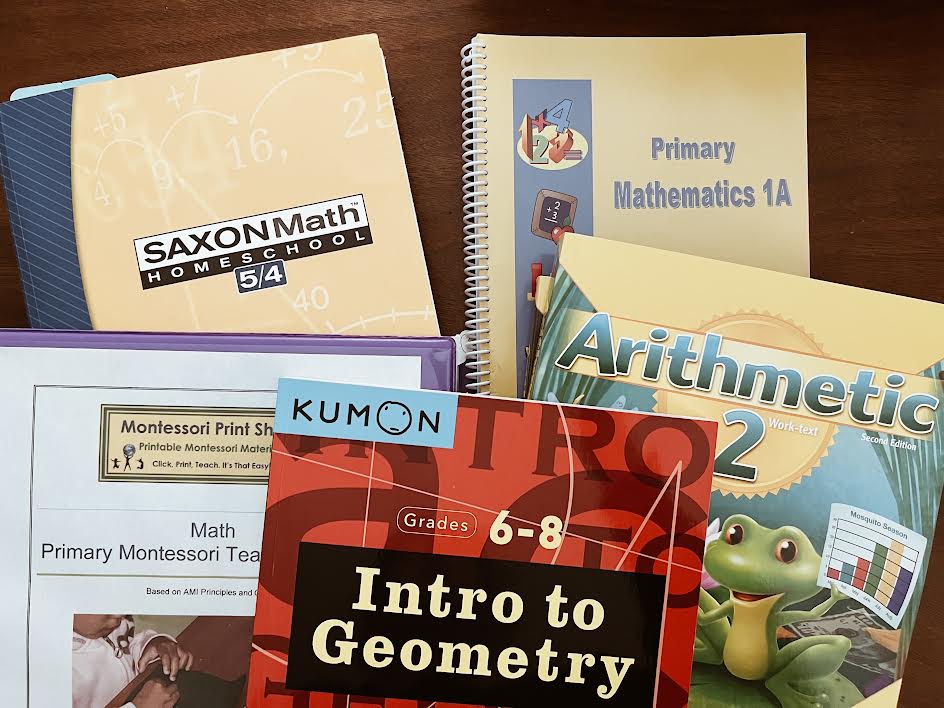
If your goal is to move through curriculum faster, this is when I would recommend you schedule more time. Depending on your student’s age and level of self-motivation, this could be around 2+ hours, especially if you break that up during the day. And consider not just doing more time working in your chosen curriculum. (Nobody wants to spend two hours at a desk working on the same problem set – I don’t care how much they say they love math.) Summer is when I would add on the extras, like Kumon workbooks for the areas your student needs extra practice in. Or hiring a tutor who can add on some accountability and extra support for you, busy mom. Look around at your local homeschool groups and see if anyone wants to start a math club. Yes, those things exist.
Don’t be afraid to let your child move ahead
Some homeschool parents worry about moving too fast through curriculum. But there is a big difference between moving quickly with a student who really understands the concepts and rushing a student who just barely grasps the concepts. You as the homeschool parent – who is grading their work and answering their questions daily – are going to know which category your student falls into better than anyone.
And don’t forget that you can move quickly through some concepts and slow down through others. The pace does not have to be set in stone. That is the beauty of homeschooling. You could have a student three grade levels ahead in math who gets to polar coordinates and just needs to slow down a bit. That’s normal. That’s not a sign that you rushed. As long as you slow down enough to make sure your child is able to do the work before moving on. This is why constant immediate feedback is critical. Don’t get behind in grading work. Do the work, check the work before moving on. Once your homeschooler is old enough, he should be doing that on his own anyways.
Remember that math is enormous
There really is no finish line in mathematics, only forks in the road. I didn’t truly appreciate this until I did my undergraduate degree in mathematics and still felt like I knew nothing, despite graduating with honours. Here I had spent years studying mathematics and there were still sub-fields within mathematics that I had never touched. If your child is truly interested in mathematics, don’t think that they will run out of things to do in high school if they finish calculus early.
You don’t have to teach all of it yourself
For some homeschool parents, the idea of their children getting ahead in math scares them because they don’t feel comfortable teaching advanced mathematics themselves. Please remember that just because you are homeschooling does not mean you cannot outsource a particular subject to a professional, whether that’s via a private mathematics tutor or a class at the local university through a dual enrolment program.
And you don’t have to figure all of this out by yourself. If you’re not a math person yourself, planning a multi-year math sequence for an advanced homeschooler can feel overwhelming. I work with students in math and statistics, and I also offer one-on-one help to homeschool parents who want to think through their child’s math progression, curriculum choices, or long-term scope and sequence. You can check out my tutoring profile here on Wyzant.

Don’t be afraid to let them run
So no, your child doesn’t need to be pushed mercilessly. If they love math, have a strong foundation, and are ready to move ahead, let them. There’s no reason to artificially hold them to grade level, and there’s also no reason you need to sacrifice the rest of their childhood in order for them to accelerate. It can happen naturally and sustainably if you plan ahead.
Keep Reading About…
How I time block our homeschool week
Talent vs hard work, according to Shinichi Suzuki
Homeschooling a child who is gifted in math
How to help a student who is struggling in math
How to choose a math curriculum (spoiler: don’t just choose one!)
How to use your summer well: the ultimate summer checklist, summer routines that include math


Leave a Reply