No homeschool mother NEEDS to have a teaching degree or classroom experience. My mother didn’t and she was an excellent homeschool teacher, if I do say so myself. However, that doesn’t mean that this experience doesn’t help. Here are seven systems I took from my classroom teaching days and implemented in my homeschool. They keep our homeschool running smoothly, allow us to pursue rigorous academics, commit to extracurriculars, and still have time for fun.
1. Stay on top of grading.
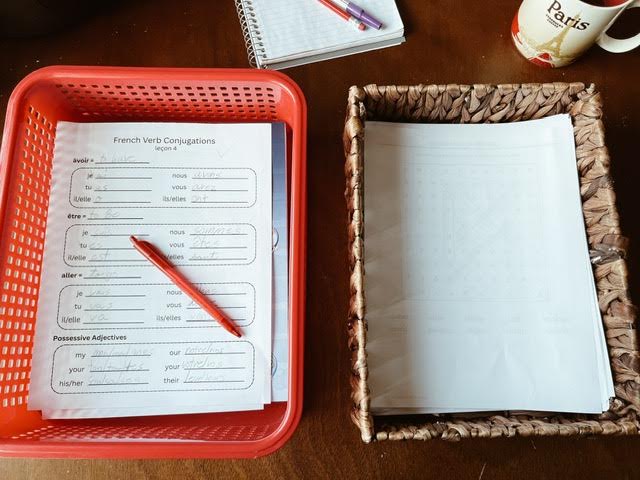
Even going from 120 students a semester down to 3 kids, if you don’t keep up with grading, I believe it grows exponentially. I have a paper tray that holds everything that needs my attention. Recycled from my last high school job. It’s sentimental, but effective. My 4th grader pops all her worksheets and workbooks in there as she finishes them during the course of the school day. Nothing lost, nothing floating around the table.
It’s also helpful to have a planned time to grade. For me, it’s at night when the kids are asleep. I check anything my 4th grader did independently, then put the papers in her binder to look over the next day. I also make sure to write “review such and such” on her daily assignment sheet. That way she’s getting consistent feedback, even if I can’t be standing over her shoulder while she works.
Of course, ideally, I check things as she goes and I answer questions as they come up. But by having this system, I know that even on the busiest of days (or when my toddler refuses to nap), that nothing falls through the cracks.
2. Make a lesson plan.
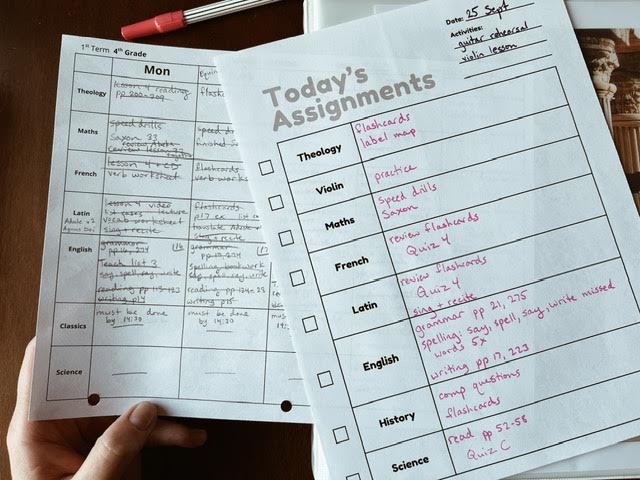
This should go without saying, but if you’re running a homeschool, you should have a plan for your year, a plan for your week, and a plan for your day. In our homeschool, that also translates into my most independent student having her own daily assignment sheet to work through. And my oldest daughter especially loves this. Because some days she wakes up and is feeling super motivated to get her work done quickly so she has time to do things like watch television before heading off to dance. And with a daily assignment sheet, she knows exactly what’s required of her. She knows what needs to be done and can do most all of it on her own without my direct involvement.
During the summer, I make next year’s school schedule, as well as the schedule for the first week and first day of school. Once school starts, I keep these critical habits: next week’s schedule gets done every Friday and daily assignment sheets get written the night before (after grading). These only take a few minutes and it means I’m never flying blind.
3. Follow a timetable.
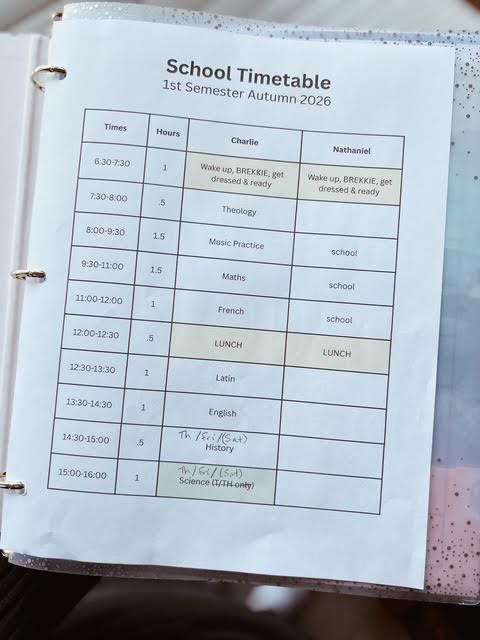
If you’re not Type A, I probably just lost you, but this is truly the secret sauce for getting it all done right here. Trying to find a way to fit in foreign language, music practice, AND an intense science course? You have to schedule it. And not just schedule it, but actually stick to the schedule you make. Alarms and timers keep the day moving and ensure everything keeps moving. Structure helps everyone.
No, we don’t jump up every time a bell rings. It just mean that we don’t let one or two subjects take over the entire day. Math lesson a bit tricky today? No worries. Stop when the math block is over and come back to it tomorrow. Spend more time on that concept at a different time. It can be that evening, tomorrow’s math block, or even the weekend. Whenever you have margin. This is how I run the day instead of letting the day run me.
4. Tidy your classroom.
At the end of the school day, desks are cleared, chairs pushed in, the floor is swept, the whiteboard cleaned, the teacher’s desk tidied. You don’t want to step into a dirty classroom tomorrow morning. The same goes for homeschooling. For us, that means that at the end of the school day, all the school stuff goes back to its home. We don’t have a fancy schoolroom, so this also means that after dinner, the table has to be completely cleared off, cleaned, not even papers or books floating around. Ready to go for school tomorrow.
Another way to keep the classroom tidy is staying on top of organization. Paper trays and especially binders are super helpful. No teacher wants floating papers. Every writing assignment I plan on keeping and every quiz has a place in a school binder. And if I don’t plan on adding it to the portfolio, I toss it or add it to my scratch paper basket immediately. It served its purpose, so it’s ready to be recycled.
5. You will always have to supplement.
No curriculum is ever going to fulfill all your needs. And you know what your students need to work on most. Even when I had a strict scope and sequence handed down from my school’s math department, I still had to figure out how to effectively teach the concepts to my students. Homeschooling is no different.
If you’re starting a new curriculum, this might take a bit of time, but if you use the same curriculum consistently, knowing what kinds of worksheets help your students most will get easy enough to get done in a few minutes. Thank you, Canva! But supplementing also includes crafts or games you think will drive home the concepts you’re teaching and really help your students master the material. This isn’t “extra”, it’s the job.
6. Red pens and star stickers are a must.
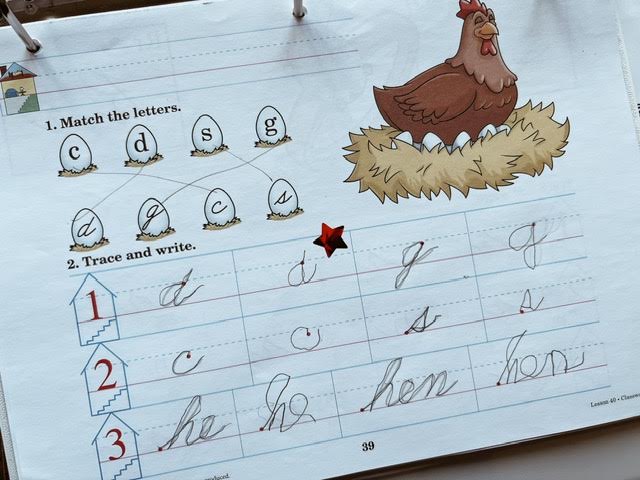
Those typical teacher tools – the red pen and the star stickers. It’s the teacher’s job to correct mistakes. Red pen lends authority. And don’t forget the importance of rewarding effort. A cheap pack of star stickers will last years and kids love when you recognise their hard work this way, from high schoolers all the way down to preschool.
7. Have a professional mindset.
Last but not least, the teacher mindset. The most important thing that my teaching career has given me to take into my homeschool is the mindset. Teaching is serious business. It’s work. It’s not something that happens naturally in the course of the day when kids are at home with their mother. (Cooking is a life skill, not math class.) Just like working a lesson plan in a classroom with 30 students, preparing a full academic day for a 4th grader and a kindergartener takes planning and preparation. It’s not something you can just play around at and hope for the best. At least, not if you want outstanding results.
On a similar note, just like a classroom teacher leaves work for the day and doesn’t make “teacher” her entire personality (although we all know the ones who do), homeschool mothers do not have to think of “homeschool mother” as their entire identity. Unless you want to, of course. But if you’re like me and have other non-homeschool-related interests, having a professional mindset about your homeschool job is super helpful. When school time is over, you’re off the clock. You can focus on the rest of your life.


Leave a Reply