Last autumn, I shared my son’s homeschool preschool routine. Now that we’ve finished the year, I wanted to share our homeschool preschool review—what worked, what didn’t, and what I’d do differently.”
*For your convenience, I hyperlinked a few books below to Amazon. Just know that as an Amazon Associate I earn from qualifying purchases.*
What We Planned vs. What Actually Happened
Looking back, I wasn’t expecting how quickly my son would move through some of the preschool material I had prepared. His reading skills took off faster than I anticipated, and his natural interest in math surprised me. On the other hand, French became our weak spot.
With my oldest daughter simultaneously in third grade—a demanding year in our classical homeschool—I simply didn’t have the bandwidth to create a preschool French curriculum for him. I’ve written before about how difficult it is to find high-quality French resources for very young children unless you’re willing to pay expensive shipping and import costs from Canada or Europe. As much as I regret letting French slip, it also taught me an important lesson: once you’re homeschooling more than one child, it’s no longer realistic to fly by the seat of your pants. If I want to include subjects like French consistently, I need a plan before the school year begins.
Preschool Progress by Subject
From Phonics to Readers
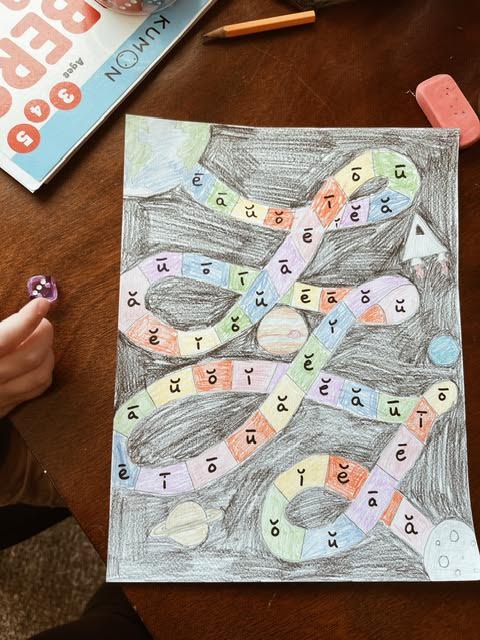
We started second semester learning the difference between short and long vowels and different blends. There were times we had to lean into topics that were particularly tricky. Because my son is younger than most kids starting preschool, I was not hesitant to slow down and spend extra time on the areas that tripped him up. We got creative and used the white board a lot as well as some random homemade games.
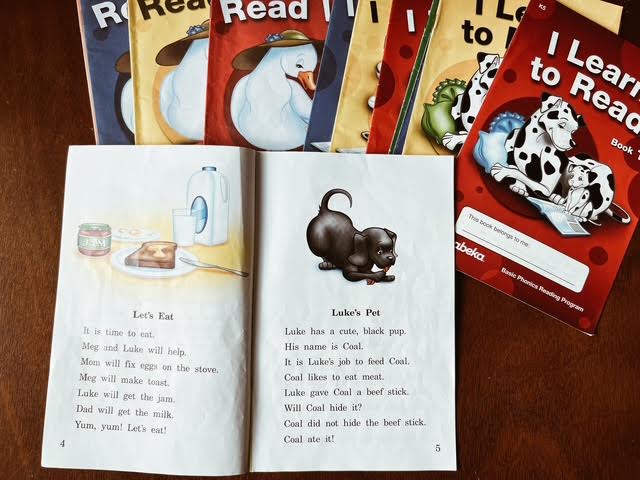
By the end of the semester we were reading the Abeka kindergarten readers. My son has been flying through these, so I plan on adding to my collection of Abeka’s first grade readers (I didn’t buy all of them for my daughter when she was in first grade because they’re so expensive). I’m not sure exactly where he’ll end up by September (since we’re continuing to read every day over the summer break), but I want to be prepared with level-appropriate readers to encourage the rapid progress he has been making.
From Learning Numbers to Arithmetic
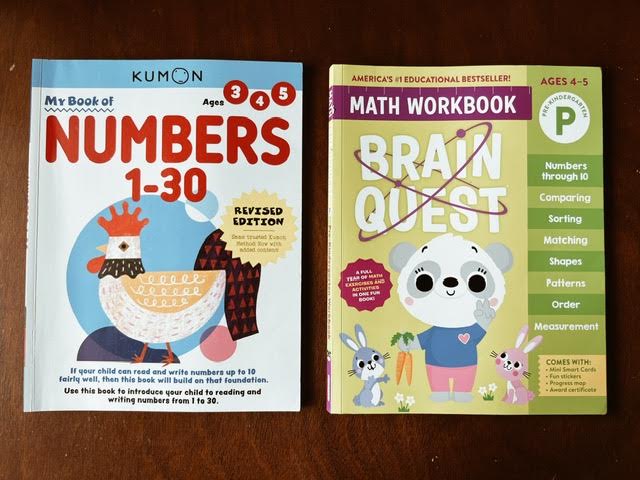
By second semester, we made it a point to spend time every day working on my son’s ability to write his numbers so we could catch up his writing ability to his comprehension. By the time we finished Kumon’s My Book of Numbers 1-30 – known in our house as “the chicken book” – he pretty much had legible numbers. We were then able to build on this skill and do a bit more preschool math in a Brain Quest math workbook for preschoolers. He actually really enjoyed both of these workbooks, especially the Brain Quest book. It was very colourful, included lots of stickers and had a fold-out milestone path for him to add stickers to after finishing each section in the workbook.
After finishing these workbooks, I decided to let him start Singapore’s Primary Mathematics 1A. It’s technically for first semester of first grade, but it starts off very slow. Topics at the beginning include associating number symbols with countable objects, comparing larger and smaller numbers (my post from last year shows that we had started practicing this early), then introducing number bonds.
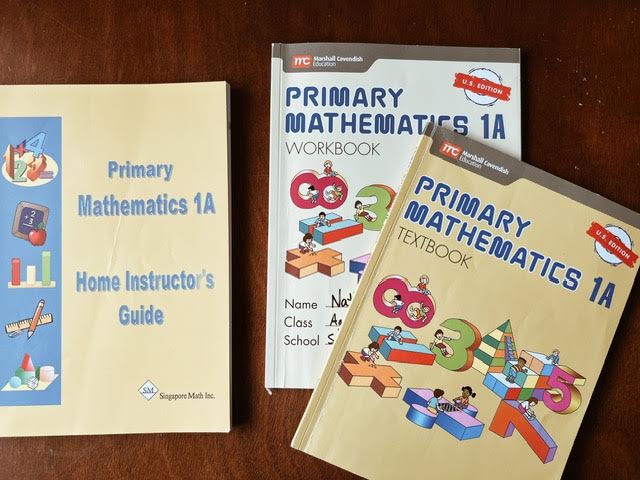
Number bonds are the Singapore method’s approach to addition and subtraction math facts. Using Singapore’s number block manipulatives (they sell these on their site), my son actually has no problem understanding and figuring these out. Because he’s so young though, I decided to put the brakes on here and practice these over the summer so that he actually has them memorised.
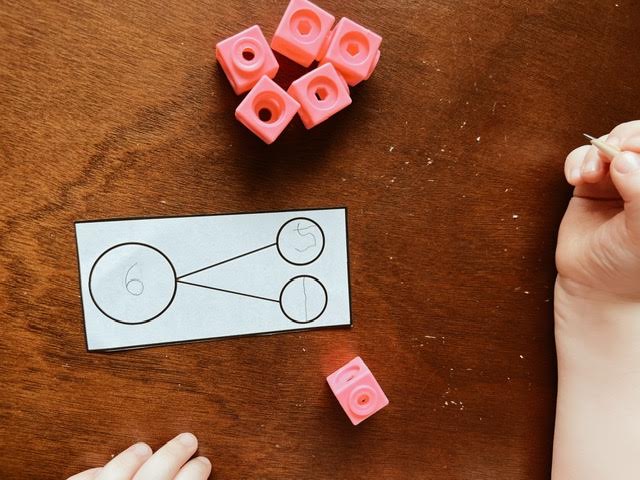
After a summer of practicing these number bonds so often that he eventually memorises them, I plan on picking back up where we left off in the Singapore textbook in September.
Cardboard Cello to Two Recitals
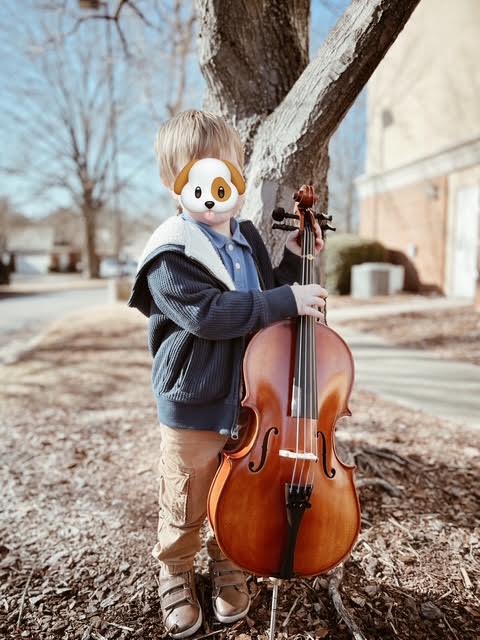
This was the year my son started music lessons. He started cello lessons last September with a homemade cardboard cello that I blogged about. By the end of the school year he had played in both a winter and spring recital. Both times with different variations of “Twinkle, Twinkle Little Star” – a rite of passage for all Suzuki musicians.
We managed to make cello practice a consistent daily routine without arguing or whining anymore. Part of that progress was his realisation of how little time it takes to practice. (I think it literally takes longer to get everything set up than to practice.) The other realisation was that he could now actually play a tune he recognised. I can sing along to his “Twinkle Theme” and “French Folk Song”. To paraphrase Amy Chua: playing an instrument isn’t fun until you’re good at it and the only way to get good at it is to practice.
From Daily French to Occasional Quizzes
Like I mentioned above, French taught me an important lesson this year. If I want it to become a consistent part of our homeschool, I need to be much more prepared than I was when my oldest was this age. With multiple children to teach, I simply don’t have the same amount of planning time I once did.
That means one of my projects this summer is to finally organize a preschool-friendly French curriculum. I’ve had this idea in the back of my mind since my oldest was little, but there always seemed to be more urgent homeschool priorities. Now it’s time to change that.
If you’d be interested in a preschool- or kindergarten-friendly French curriculum, let me know. There are so many wonderful options available for Spanish, but I’ve struggled to find something similar for French. If I end up creating a curriculum that works well for our family, I’d love to share it here on the blog.
What Surprised Me Most
Going into preschool, I tried really hard to not compare my son to his older sister. In fact, it was the main reason I chose the cello for him instead of violin like his sister. Looking back now, I realise I may have overcorrected a bit. Because my daughter showed signs of being exceptionally advanced very early, I lowered my expectations for what preschool could look like for him. Instead, he surprised me over and over again.
What I Would Tell Another Parent Starting Preschool Homeschool
I had 6 major takeaways from this past preschool year with my second child. If you have a rising preschooler in your homeschool, here is my best advice.
1. Keep Lessons Short
And when I say short, I mean really short. It only takes a few minutes of consistent daily practice to see progress in reading, numerical literacy, and even the cello.
One thing I learned with my preschooler is that the language we use matters. Something as simple as saying “number practice” or “let’s cuddle and read together” instead of “school” can make all the difference in how a preschooler responds to an invitation to learn.
If you have a reluctant preschool student, a timer might just be your new best friend. “Let’s just practice for 5 minutes and then we’ll stop.” Those few minutes of consistency add up quickly.
2. Don’t Underestimate Preschoolers
Because every child is different, it’s difficult to put an age on academic levels. Don’t let a number on a book make you think that your child is too young to start. The Brain Quest math workbook my son finished this semester was labeled ages 4-5. He finished it when he was 3. Those numbers are a guide, not a rule. Don’t underestimate what your child can accomplish, especially with a dedicated parent teaching him.
3. Follow Their Interests
I know this advice has gotten a bad reputation over the years. Some parents hear “follow their interests” and assume it means letting children do school only when they feel like it. That’s not what I mean.
It means leaning into their enthusiasm when it appears. If he’s excited about math, let him do a few extra workbook pages. If he dreams of becoming an astronaut, remind him that astronauts need to be strong readers. If he wants to experiment by playing “Twinkle, Twinkle Little Star” on the lower strings of his cello, let him explore. Follow their curiosity while still moving towards your academic goals. Education isn’t about checking boxes—it’s about cultivating a love of learning.
4. Build the Habit of Finishing
There’s a fine line between stepping away from something difficult and giving up because something is hard. For a preschooler who is still developing that distinction, it can look exactly the same.
That’s why I don’t let my son stop in the middle of a worksheet or activity simply because it becomes challenging. At the same time, I also don’t force him to finish my entire lesson plan if I can tell he’s frustrated. Instead, we find a natural stopping point.
Maybe writing an entire row of 3s feels like too much today, so we finish half and come back tomorrow. Maybe a page of math problems is challenging, so we complete one together and return to the rest later. The goal isn’t to push until he is miserable. The goal is to teach him that difficult doesn’t mean we quit: we adjust.
We decide together what he can handle that day, make a plan to return to it, and always finish with a sense of accomplishment rather than frustration.
5. Track Progress Without Over-scheduling
For my third grader, I keep a weekly schedule with clear expectations for what we will accomplish in each subject. Preschool looks completely different.
On Fridays, after I plan my daughter’s school week, I look back at what my son accomplished and think about what feels realistic for the week ahead. If there’s something specific I want to cover, I’ll write it down. Otherwise, I leave his schedule blank and simply track what we complete as the week goes on.
That’s it. There is no stress about “falling behind” because preschool is not about checking off every item on a schedule. The goal is simply to spend time on each subject consistently every day and build the habits that will support future learning.
6. Celebrate Small Wins
One area I’m trying to focus on with my preschooler is confidence. As a second (and middle) child, I want to make sure he knows that he has the power to accomplish hard things. And I do that by celebrating every small win. Every little milestone. The great thing about supplemental workbooks like Kumon or Brain Quest is that they have fill-in-the-blank certificates in the back. When my son finished those books, you can bet we signed those, showed dad, and hung them up on his wall. And yes, I have had the opportunity to point to them when he’s having an age-appropriate pity party and remind him that he can do hard things.
Keep Reading About…
How I started preschool with my second child – part one of this post
The Montessori Method in preschool
Teaching a preschooler how to read
Making a cardboard cello or cardboard violin for your young music student
Why Shinichi Suzuki believed in children’s potential in music


Leave a Reply